
Christmas is really, really, really big in English speaking countries. It’s one of the biggest religious holidays, but, more than that, it’s cultural and economic importance cannot be ignored. All December long, in shops and work places, restaurants and schools, you’ll hear Mariah Carey and Wham sing about love at Christmas time, and colleagues and even strangers want to know how your Christmas is going. You need to be prepared with the right vocabulary! So, let’s jump on in and learn…
The most important vocabulary for Christmas:
1. Christmas
December 25th was first named as Jesus’ birthday in 221, but surprisingly there’s no record of the church actually celebrating it until over a hundred years later, in 336.
But why do we call it Christmas??
The “Christ” part of Christmas refers to Jesus – it comes from the Greek word “Christos”, and in English we call him Jesus Christ. The “mas” in Christmas comes from Mass, the Catholic church service. In other words, people went to church on December 25th for the Mass of Christ, or Christmas.
2. Advent Calendar
The word advent comes from the Latin word adventus, meaning “arrival” or “coming,” because this is the time of year when we celebrate the coming of the baby Jesus on December 25.
German families in the 1800s started counting the days until Christmas by tallying chalk marks on a door or wall, and in the early 20th century, Gerhard Lang, a German printer, created the first printed advent calendars. His design featured colorful pictures and small doors that could be opened daily to reveal festive images or Bible verses, and in the 1950s, chocolate advent calendars hit the market. Of course, now you can get advent calendars filled with beauty products, beer, tea, Lego…
3. Mulled Wine
Mulled wine is a warm and sweetly spiced drink invented by the ancient Greeks to use up bad wine. In English, the verb “to mull” first appeared in the 16th century and refers to the process of heating, sweetening and/or adding spices to wine or ale.
In German, it’s called Glühwein. In Sweden, it’s known as glögg.
If you are feeling really festive, you can add a little kick of cognac, armagnac or rum to warm you up from the inside, or skip the wine and make yourself a hot cup of mulled cider (hard or non-alcoholic).

4. Gingerbread
Gingerbread is the classic Christmas baked treat. Gingerbread men, Gingerbread houses, Gingerbread stars, trees, hearts….
is a sweet biscuit containing ginger and often other spices like cinnamon, cloves, nutmeg, cardamom and anise. In Switzerland there is a similar baked treat called Lebkuchen, but they aren’t really the same.
Lebkuchen generally has a softer, chewier texture, whereas Gingerbread normally has more ginger and is crispier. That’s why I used the British word “biscuit” above, and not the American word “cookie”. When I think of cookies, I think of something soft and chewy. The Brits like their biscuits thinner and crunchier – I guess so they can dip them in their tea.
5. Noel
The word Noel comes from the Old French word for Christmas, noël, which comes from the Latin natalis, meaning “birth” (as in the birth of Christ).
But why do we English speakers sing “The First Noel,” and not say “The First Weihnachten,” the German word? First of all, “Noel” is a lot easier to sing than “Weihnachten”.
But also, after the Norman Conquest of England in 1066, many French words entered the English lexicon, especially those related to religion and culture. By the time the carol “The First Noel” was written in the 1700s, Noel was already a long-established term in English for Christmas.
Weihnachten didn’t stand a chance.
6. Santa Claus, old Saint Nick, Chris Kringle
The name Santa Claus comes from the Dutch name Sinterklaas, which entered English usage through Dutch settlers in New York. Kris Kringle comes from the German Christkindl (Christ Child), who was traditionally the gift-bringer on Christmas, because Sammi Klaus brings treats on December 6th instead. The name evolved as German immigrants brought their traditions to America, and it was conflated with the Santa Claus figure.
Father Christmas, dating back to at least the 15th century, is a traditional English name predominantly used in the UK and Commonwealth countries like Australia and New Zealand. Saint Nick comes from Saint Nicholas of Myra, a 4th-century Greek bishop celebrated for his charitable deeds and miracles. St Nick is the OG Santa Claus.

7. The Naughty List
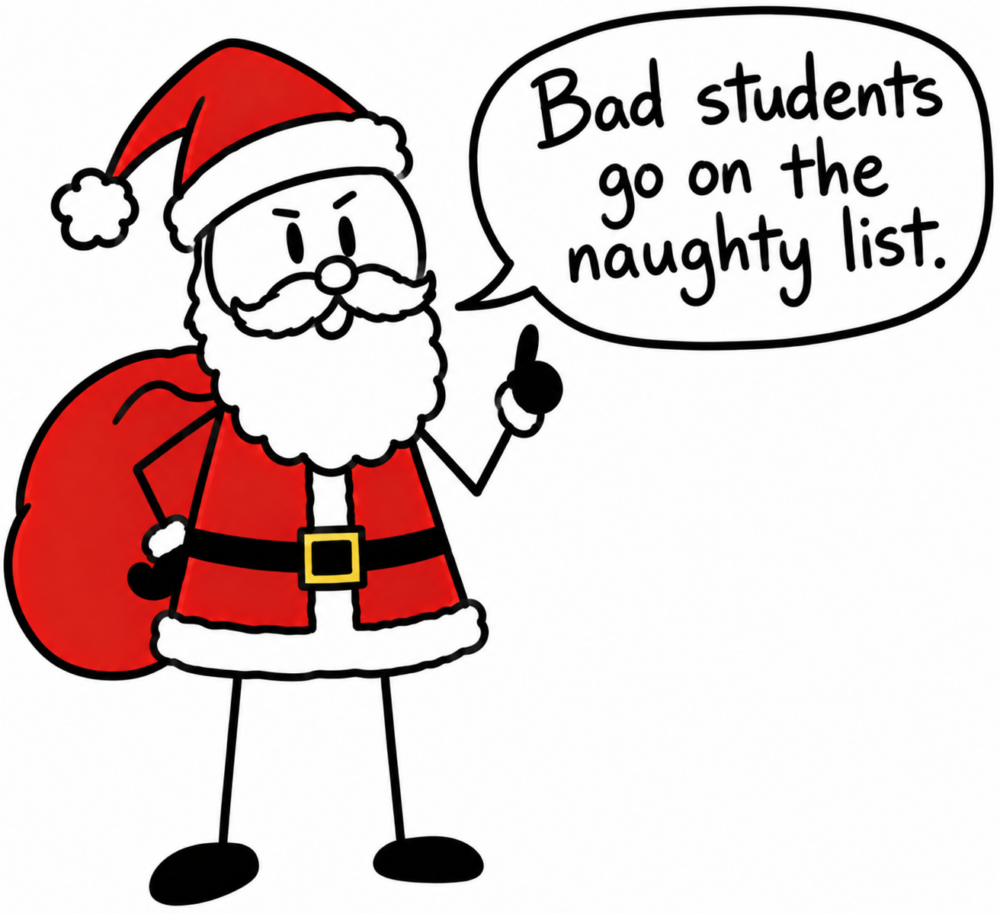
A person is naughty if they are mean or rude, break the rules, or generally behave badly. Santa Claus has a list of all the naughty kids and all the nice ones. In Switzerland, the naughty children are taken into the woods and beaten by Samichlaus’ helper, Schmutzli. I’m happy to inform you that the English Santa Claus is non-violent, and just gives the naughty children coal instead of presents or candy. Last year I put one piece of coal in with the candy for my younger son, and he didn’t react well.
8. Reindeer
The English Santa doesn’t have just a donkey to walk around with, he has nine magical reindeer that can fly! And if it’s a really foggy night, Rudolph joins the team. This way, he can land on the roofs of the houses and go down the chimneys to deliver the presents.
9. Mince Pies
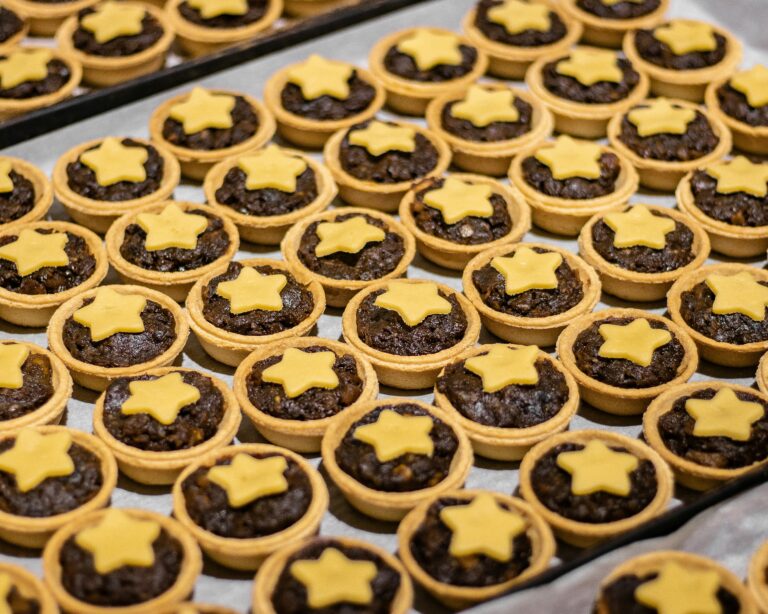
These little pies are traditional only enjoyed during Christmas, and for many it’s a daily treat! The filling, called mincemeat, used to contain real meat (!!) but thankfully now is just a sweet mixture of dried fruits, spices like cinnamon and nutmeg, and sometimes a splash of brandy or other spirits. (See how British people feel about mince pies here.)
10. Merry (Christmas)
This one is important to me because my name is Mary and in Switzerland my name gets misspelled a lot. So, the most important thing to know is: when it means “happy” it’s with an E and TWO Rs. When it’s my name: an A plus one R (Watch the video for this here.)
The word Merry comes from Old English and it was a totally common adjective to describe anything that brought happiness or enjoyment. It would’ve been normal to hear, “I feel so merry! What a merry party we had!”
Nowadays, we say Merry Christmas, but we never say Merry Holidays. And people just won’t understand you if you wish them a Merry Birthday.
So why is the word “Merry” only used with Christmas?
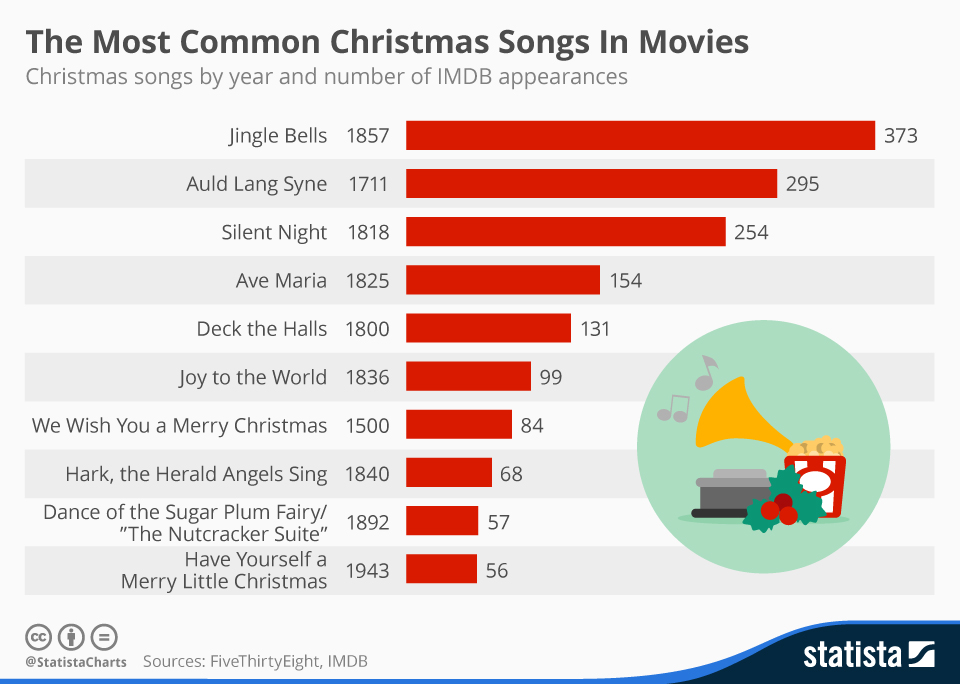
Well, the phrase “Merry Christmas” became forever connected to Christmas through songs and literature. “We Wish You a Merry Christmas,” “May your days be merry and bright,” “Have yourself a merry little Christmas.” And then in 1843, Charles Dickens’s A Christmas Carol popularized “Merry Christmas” as the joyful greeting to give at this time of year.
11. Mistletoe
Mistletoe is a parasitic plant that grows with small, shiny leaves and white berries which grows on large trees, especially oak and apple trees, and steals their water and nutrients. It’s name comes from Old English, and literally means dung (poo) stick.
Despite its less-than-romantic name, it is a symbol of love, thanks to Norse mythology. The goddess Frigg used it to bring her son Balder back to life. Over time, this connection to love evolved into the custom we know today – if you find yourself under the mistletoe with someone, you are culturally required to kiss.

12. Bells and Their Sounds
Unfortunately for your English, but fortunately for our musical life, there are a lot of bells and they make a lot of different sounds:
-
Church Bells: Deep and resonant, church bells can ring, chime or toll. Example sound: “Ding-dong” or “Bong.”
-
Handbells: Light, bright, and clear, they tinkle or peal. Example sound: “Ting” or “Chime.”
-
Doorbells: Short and often electronic, they ring, ding or buzz. Example sound: “Ding-dong” or “Brrr-ing.”
-
Sleigh Bells: Jingly, metallic, and festive, these bells jingle. Example sound: “Jingle-jingle.”
-
Cowbells: Clunky and hollow, cowbells clang or clunk. Example sound: “Clang-clang.”
-
Bicycle Bells: High-pitched and sharp, you cling or ring these. Example sound: “Tring-tring.”
-
Alarm Bells: Loud, rapid, and repetitive, they clang, go off, or ring. Example sound: “Clang-clang-clang.”
-
Wind Chime Bells: Soft, melodic, these tinkle or chime. Example sound: “Ting-ting-ting.”
13. Carols and Christmas Songs
A Christmas carol is basically the ancient ancestor of the modern Christmas song, but with more God and absolutely no Santa. Think “Silent Night” or “Oh Little Town of Bethlehem” or “O Come, All Ye Faithful.” They’re the classics you hear in church. The word comes from the Old French “carole,” meaning a circle dance with singing, which evolved into Christmas carol singing.
On the other hand, a Christmas song is the modern-day, party music for all Christmas parties. These songs are usually about snow, love, or wanting presents, and are best listened to while drinking mulled wine or a festive cocktail.
14. Elf
An elf is normally a small, magical being with pointed ears, a mischievous grin, and a knack for mischief or craft. Myths about elves date back thousands of years. Lucky Santa Claus has a whole team of elves as his helpers who make the toys for all the boys and girls, wrap the presents, cook and clean, and feed the reindeer. It’s a full-time job.
Why does Santa Have Elves?
In the 1823 poem “A Visit from St. Nicholas” (commonly known as ‘Twas the Night Before Christmas), Santa is described as “a jolly old elf,” which explains his magical power of being able to enter houses through the chimney. Later, 19th-century stories expanded on this idea, introducing Santa’s elves as industrious helpers who make toys in his workshop at the North Pole. Their small size and fantastical magical nature made them ideal for working in a secretive, magical workshop.
So, Santa’s elves are a blend of ancient mythology and Victorian imagination, and their role as his helpers makes them an essential part of Christmas magic!
15. Christmas Crackers
Christmas crackers are colourful tubes of paper and everyone gets one at Christmas dinner. When two people pull the ends apart, the crackers break open and make a loud bang! Inside, you’ll find a small gift, a paper crown to wear, and a funny joke, which they read out loud to everyone. The best jokes are normally so bad, they’re good.
They’re a fun way to celebrate Christmas with family and friends in the UK and Commonwealth countries.

16. Eggnog
Eggnog is a thick, sweet and creamy drink that people often enjoy during Christmas and winter celebrations. Most people in the US don’t make it from scratch, since you can buy a wide variety of the non-alcoholic version by the liter in grocery stores all December, right next to the milk. Last year Americans drank 1.2 BILLION glasses of this delicious, festive drink!
This traditional Christmas drink has its roots in medieval England, where a similar drink called “posset” was popular with the upper classes. Over time, its association with luxury (due to expensive ingredients like eggs, milk, and spices) made it a festive choice for special occasions.
When eggnog made its way to the American colonies, it became especially associated with Christmas because of its rich and indulgent ingredients, which were seen as celebratory. Rum, a cheaper spirit in the colonies compared to expensive European liquors, became the alcohol of choice for the drink, solidifying its popularity.
17. Secret Santa
Secret Santa is what we call the game where you have to be a sneaky elf and get someone a Christmas gift without them finding out who it’s from. (Watch the video of this here.) This is a popular game at schools, in companies, and even in families. My family in California plays this every year, and it means we don’t have to buy 30 people presents! Here’s how it works:
First, each person picks a name out of a hat (or a bowl, or something), and that person becomes their “gift target.” But shhhhh, it’s a secret—you’re not supposed to tell anyone who you picked!
There’s usually a budget, so you don’t end up giving someone a fancy bottle of whisky while you only get a pair of used gloves in return. This really depends on the group of people – it could have to be something homemade or something second hand, or it could be the gifts have to cost more than 100 dollars.
On the gift exchange day, everyone gives their gifts, and the recipient has to guess who their Secret Santa was. Alternatively, the Secret Santas can just save everyone time and reveal themselves. That’s fine, too.
18. Candy Cane
Candy canes are incredibly popular in the US, with more than 1.76 billion candy canes produced there every year – 90% of them are sold in the weeks between Thanksgiving and Christmas!
Did you know that the longest candy cane ever made was in Switzerland? It measured 51 feet (almost 15.5 meters) long!
They were most likely invented in the 17th century in Cologne, Germany by a German choirmaster in order to keep children quiet. Here children, put this in your mouth and shut up. Ah, Christmas time!

19. Boxing Day
In Switzerland, the big celebration is on the 24th, but December 25th is an important day, too. In a very similar way, the BIG day in English cultures is Christmas Day, the 25th, but the 26th is also an important holiday called Boxing Day. This is a time to spend with your extended family, go on long walks, enjoy good food and watch sport on TV.
In the Middle Ages, servants and laborers would work on Christmas Day to serve their masters. On the day after Christmas, they had a day off and often received a gift or box of goods as a thank you present.
Boxing Day coincides with the feast day of St. Stephen, the first Christian martyr, who is traditionally associated with acts of charity and helping the poor. This religious aspect reinforced the custom of giving to those in need on December 26.
During the Victorian period, Boxing Day became widely recognized as a day of charitable giving. Wealthy families would box up gifts or leftovers and distribute them to servants, workers, and the poor. It also became customary for tradespeople, such as milkmen, postmen, and delivery workers, to receive a Christmas box or tip from those they served throughout the year. (Check out the video for this here.)
20. Christmas Tree
The tradition of bringing a Christmas Tree inside to decorate started in Germany in the 16th century, and the original decorations were apples – kind of like the round ornaments that we use today, right?
The tradition only became popular in English speaking cultures in 1848, when a London magazine published a portrait of the royal family with Queen Victoria and her German husband, Prince Albert, around a decorated Christmas tree.
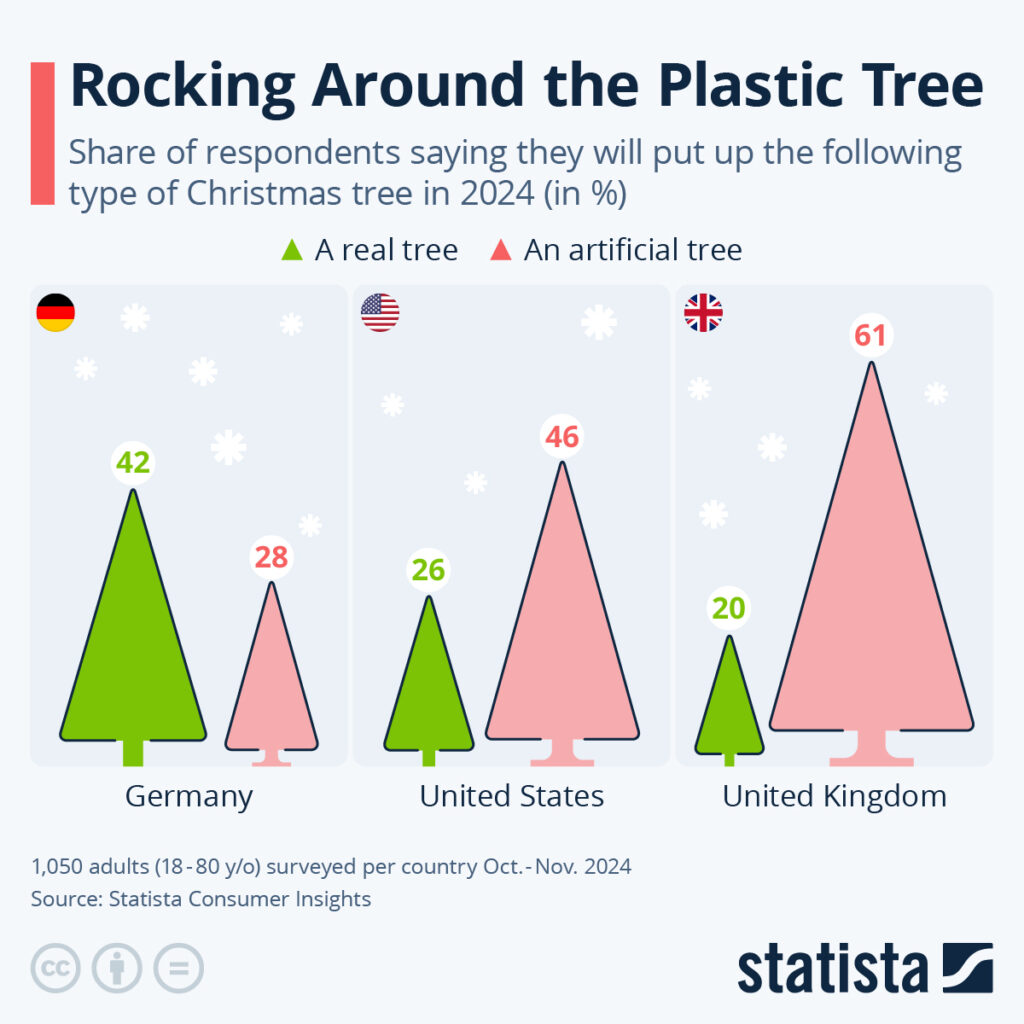
Only two years later, Christmas trees began being sold in the US, and now more than 25 million real Christmas trees are sold every year in the US, and nearly 77% of Christmas-celebrating households have an artificial tree.
21. Stockings
Stockings are basically giant, decorative socks that children hang up for Santa to fill on Christmas Eve. In olden times, before the invention of modern-day socks, men and women wore stockings, which could be made of silk or wool or cotton and went up to their knees. Nowadays, the word is almost only used for Christmas stockings or to refer to historical clothing.
Where are Stockings hung? Stockings are traditionally hung above the fireplace, but in homes without fireplaces, people hang them on walls, staircases, shelves, etc.
What’s inside on Christmas morning? Stockings are often filled with candy and small toys and gifts, which in shopping terminology we call “stocking stuffers.” In some traditions, coal is placed in stockings of naughty children (though this is mostly a joke today)(my son didn’t find it funny when I did this one year).
The origin of stockings comes from the legend of St. Nicholas placing gold coins in the stockings of three poor sisters, and the theme of Santa filling footwear with treats can be found in lots of cultures. In Switzerland, many children leave their boots outside for Sammi Chlaus to fill on December 6th. In the Netherlands, children leave shoes out for Sinterklaas, and in France, children leave their shoes by the fireplace for Père Noël.
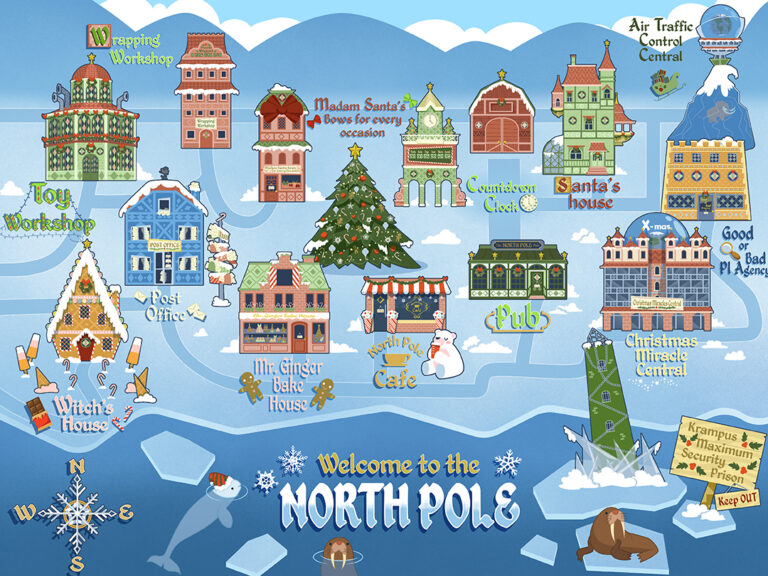
22. North Pole
The North Pole, the northernmost point on Earth, is the home to Santa Clause and his cohort. In the 1800s, English writers and artists imagined the North Pole as Santa’s home because it felt like a magical and faraway place, where no children could try to go. When Thomas Nast, an American artist, drew pictures of Santa’s workshop at the North Pole in the late 1800s, this whimsical idea became popular and an official part of the myth.
Santa lives there year-round with his wife, Mrs Claus, along with a bunch of elves and, of course, reindeer.
23. Jolly
The word “jolly” comes from the Old French word jolif, which meant “festive, merry, pretty.” It has a cheerful, festive associations in contexts like “a jolly time” or “feeling jolly.” It often carries a slightly old-fashioned charm, especially in American English. In British English, its informal and emphatic uses remain more common.
Are you ready for some grammar?
As an Adjective, it can mean:
– jolly + noun = cheerful, it conveys a sense of happiness
Example: “He had a jolly laugh that made everyone smile.”
– “jolly good” = excellent (British English)
Example: “We had a jolly good time at the party.”
As an Adverb (primarily British English):
– jolly + adjective = very or extremely, similar to “quite” or “rather”
Example: “It’s jolly cold outside today!”
– “jolly well” used for emphasis, especially when the speaker is angry or irritated (only British English):
Example: “You jolly well better be on time!”
Example: “I will eat as much sugar as I jolly well like.”
24. Christmas Eve
The term “eve” in Christmas Eve is short for evening (or eventide). It refers to the night before a significant day. Since Christmas Day is December 25th, Christmas Eve is the evening of December 24th, marking the start of the festive celebration in many cultures. In the same way, New Year’s Day is on January 1st, so New Year’s Eve is on Dec 31st. All Saints’ Day is on November 1st, and so Halloween (which means “holy evening”) is the day before, on October 31st.
The tradition of marking “eves” before major events, especially in Christianity, has roots in Jewish customs where a day was considered to begin at sunset (based on the Genesis creation story: “There was evening, and there was morning”). This belief influenced Christian practices, so Christmas celebrations traditionally began on Christmas Eve.
Now you have all the most important vocabulary for Christmas – so turn on some Christmas songs or a cheesy Christmas movie and enjoy the season! If you want to keep improving your English, check out how I can help, or contact me for a consultation!
 English
  Deutsch (Schweiz)